Does Ginkgo Biloba Help Memory? What It Does & How Long It Takes
The Quick Answer
Ginkgo biloba is one of the world's most popular memory botanicals, best known for supporting healthy circulation to the brain and everyday mental clarity. It works gradually — plan on at least four to six weeks of daily use — and it is not a dementia preventer: large long-term trials settled that. Where ginkgo really shines is as one part of a balanced formula, which is exactly how MemoMatrix uses it.
Ginkgo is the grandparent of memory supplements. Long before Lion's Mane or Alpha-GPC were household names, millions of people were taking ginkgo leaf extract hoping to stay sharp. So does it actually help memory? What did the big studies find? And how should you use it to get real value? Here is a clear, plain-English guide.
The problem: names, words and details that slip away
Most people who look up ginkgo are not worried about anything dramatic. They notice small, frustrating things: a word on the tip of the tongue, a name that will not come, losing focus halfway through a task, or a general "foggy" feeling by mid-afternoon. These everyday lapses become more common with age, stress and busy lives.
Behind many of them is a simple fact: your brain is about 2% of your body weight but uses around 20% of your energy. It depends on a steady flow of oxygen- and nutrient-rich blood, and on healthy brain chemistry to store and retrieve information. When either side is under strain, recall and focus feel slower. If those "why did I come in here?" moments sound familiar, our guide to the doorway effect explains a big part of it.
What is ginkgo biloba?
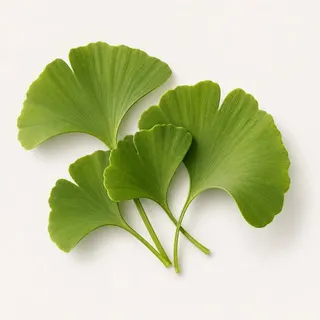
Ginkgo biloba is one of the oldest tree species on Earth, with distinctive fan-shaped leaves. Supplements use a standardized extract of the leaves, which contains two main families of active compounds:
- Flavonoids — plant antioxidants that help protect cells from everyday oxidative stress.
- Terpene lactones (ginkgolides and bilobalide) — compounds studied for their effects on blood flow and nerve cells.
Ginkgo is traditionally used to support healthy circulation, including the tiny blood vessels that feed the brain. That is the core idea behind its reputation: a better supply line for a very hungry organ.
What does the research say?
Here is the honest picture, because it helps you use ginkgo the right way:
- Everyday clarity and attention: a number of smaller studies have reported benefits for attention, processing speed and short-term memory with daily ginkgo extract, especially in tasks that require focus.
- Prevention of decline: the large, long-term Ginkgo Evaluation of Memory (GEM) study in older adults, funded by the US National Institutes of Health, found that ginkgo alone did not prevent dementia or slow age-related decline. So ginkgo should never be seen as a treatment or a shield against disease.
- The takeaway: ginkgo is a supportive ingredient for day-to-day clarity and circulation, not a stand-alone solution. That is why the smartest formulas use it as one member of a team.
How long does ginkgo take to work?
| Timeframe | What people typically notice |
|---|---|
| Week 1–2 | Usually nothing dramatic — ginkgo is not a stimulant. |
| Week 4–6 | A fair first check-in point; some people report steadier focus. |
| Month 3 and beyond | The window many studies measured (12 weeks or longer). |
| Ongoing | Benefits depend on consistent, daily use. |
Like most natural nootropics, ginkgo rewards patience and consistency. Take it every day, keep your other habits steady, and judge it after a couple of months rather than a couple of days. Not sure when in the day to take it? See our guide on the best time to take a memory supplement.
What people try (and why ginkgo alone often disappoints)
- Cheap single-ingredient ginkgo pillsQuality and standardization vary a lot, and ginkgo on its own only covers one part of the memory picture.
- Expecting a quick effectMany people quit after a week because they feel nothing — long before ginkgo has had a fair chance.
- Stacking five separate bottlesSome people try to build their own blend with ginkgo, Bacopa, Lion's Mane and more. It gets expensive, confusing and hard to keep up every day.
- More coffee insteadCaffeine gives a short burst of alertness, then a dip. It does not support memory storage or recall over time.
The approach that works better is simple: pair ginkgo's circulation support with ingredients that cover recall, brain chemistry and calm focus, in one easy daily routine — plus the free basics in our guide on how to improve memory and focus naturally.
Safety notes
Ginkgo leaf extract is generally well tolerated, but it may affect blood clotting. If you take blood thinners, aspirin or other medicines that affect bleeding, have a bleeding disorder, or have surgery scheduled, talk to your doctor before using any product with ginkgo. The same goes if you are pregnant, nursing or take prescription medication. Never eat raw or roasted ginkgo seeds. And if memory problems are sudden, severe or getting worse, see a doctor first — that deserves a proper evaluation.
Our recommendation: MemoMatrix

If you want ginkgo working for you the smart way, MemoMatrix is the option we recommend. It was built exactly for this: ginkgo's circulation and clarity support, combined with seven partners that cover the rest of the memory picture, in one stimulant-free routine.
- Ginkgo Biloba — supports healthy circulation to the brain and everyday clarity.
- Bacopa Monnieri — the classic herb for memory recall.
- Lion's Mane — the "brain mushroom" for long-term nerve health (see our Lion's Mane guide).
- Alpha-GPC and Huperzine A — support acetylcholine, the learning neurotransmitter.
- Phosphatidylserine — a building block of brain-cell membranes.
- L-Theanine and Rhodiola Rosea — calm focus and resilience to mental fatigue.
It is stimulant-free, non-GMO and made in a US GMP-certified, FDA-registered facility. The routine is easy: 2 capsules a day, with each 60-capsule bottle lasting a month. On the official store it runs from $49 per bottle on the 6-bottle bundle (with free US shipping), $69 per bottle for 3 and $79 per bottle for 2, all protected by a 60-day money-back guarantee — long enough to give a gradual ingredient like ginkgo a genuinely fair trial. The one thing to keep in mind: like every natural nootropic, its benefits build over a few weeks of daily use.
Frequently Asked Questions
Does ginkgo biloba really help memory?
Ginkgo biloba is one of the most widely used botanicals for memory and mental clarity. It is traditionally used to support healthy circulation to the brain, and some smaller studies have reported benefits for attention and short-term memory. Large long-term trials in older adults did not show that ginkgo prevents age-related decline, so it is best seen as everyday support for clarity and focus, working most effectively alongside other memory nutrients.
How long does ginkgo biloba take to work?
Ginkgo is a gradual ingredient. Most guidance suggests taking it daily for at least four to six weeks before judging, and many studies ran for 12 weeks or longer. Consistency matters more than timing.
What does ginkgo biloba do for the brain?
Ginkgo leaf extract contains flavonoids and terpene lactones (ginkgolides and bilobalide). It is traditionally used to support healthy blood flow, including to the brain, and its flavonoids have antioxidant properties. Better circulation means a steady supply of oxygen and nutrients for busy brain cells.
Is ginkgo biloba safe to take every day?
Standardized ginkgo leaf extract is generally well tolerated by healthy adults; mild headache or stomach upset are the most common complaints. Because ginkgo may affect blood clotting, people who take blood thinners or aspirin, have a bleeding disorder or have surgery coming up should talk to their doctor first. Never eat raw or roasted ginkgo seeds.
Is ginkgo better alone or in a blend?
Ginkgo covers one job well: supporting circulation and clarity. Memory also depends on recall, acetylcholine, brain-cell membranes, calm focus and stress resilience. A balanced blend like MemoMatrix pairs ginkgo with Bacopa, Lion's Mane, Phosphatidylserine, Rhodiola, Alpha-GPC, Huperzine A and L-Theanine in two capsules a day.
Can I take ginkgo with coffee?
Most people can. Ginkgo is not a stimulant and contains no caffeine. If you want calm, steady focus without jitters, a stimulant-free blend that includes L-Theanine, like MemoMatrix, is a gentler alternative to adding more coffee.