Best Time to Take a Memory Supplement: Morning or Night, With or Without Food?
The Quick Answer
For a stimulant-free memory supplement, the morning, with breakfast, is the best time for most people. It puts the ingredients on board for the hours you actually need to think, food makes several nootropic nutrients easier on the stomach and easier to absorb, and a fixed morning slot is the simplest habit to keep. Evening works too if the formula has no caffeine. What matters most is the same time, every day, for weeks, which is exactly how the 2-capsule routine of MemoMatrix is designed.
You have decided to try a memory supplement. Now the practical questions start: morning or night? Before or after food? What if you forget a day? Does it clash with coffee? Those details sound small, but they decide whether you take the product consistently enough to notice anything. Here is a plain-English guide to timing, food and habit, plus the routine we recommend.
Why timing matters more than people think
Most natural nootropics are not like a painkiller that works in twenty minutes and wears off. Ingredients such as Bacopa, Lion's Mane and Ginkgo work cumulatively: their benefits build over weeks of steady daily intake. That changes what "best time" means. It is less about catching a magic window and more about picking the slot you will never miss.
At the same time, the time of day does affect two practical things: whether the supplement is active during your demanding hours, and whether it interferes with your sleep. Get those two right and the rest is habit.
Morning vs. night: the honest comparison
| Question | Morning | Evening |
|---|---|---|
| Ingredients on board when you need focus | Yes — lines up with work, study and errands | Mostly while you sleep |
| Easy to remember | Very — pairs with breakfast or coffee | Easy to skip on busy nights |
| Sleep impact | None | None if stimulant-free; a problem with caffeinated formulas |
| Calm-focus ingredients (L-Theanine) | Smooths out morning coffee | Pleasant, but you miss the daytime benefit |
| Our verdict | Best for most people | Fine as a backup if mornings are chaotic |
The one case where evening clearly wins is a formula built around sleep or relaxation. For a memory and focus blend, you want it working while you are awake and thinking, so the morning is the natural fit.
With or without food?
With food is the sensible default. Three reasons:
- Absorption. Several common memory nutrients — phosphatidylserine, for example, and many botanical extracts — are generally considered easier to absorb when there is some dietary fat in the meal. Eggs, yogurt, nuts or avocado at breakfast do the job. (More on PS in our phosphatidylserine timeline.)
- Comfort. Capsules on an empty stomach are the most common cause of the mild queasiness some people report. A meal takes that off the table.
- Memory of a different kind. Tying the capsules to breakfast means you never have to remember them separately.
Always follow the directions on your product's label. If it says to take it with water and gives no food instruction, taking it with breakfast still fits.
Can I take it with coffee?
With a stimulant-free formula, yes. There is no caffeine stacking, no jitters and no afternoon crash. In fact, a blend that includes L-Theanine is a popular partner for coffee precisely because L-Theanine is known for a calm, steady kind of focus. The only products that clash with coffee are the ones that already contain caffeine or other stimulants — which is one of several reasons we prefer formulas without them, as we explain in our comparison of nootropics vs. brain games vs. coffee.
The mistakes that quietly waste a bottle
- Taking it "whenever you remember"Random timing means missed days, and missed days are the enemy of cumulative ingredients.
- Splitting the dose without a planIf the label calls for two capsules a day and you take one in the morning and forget the other, you are running at half strength all month.
- Doubling up after a missed dayIt does not catch you up, and it is not how the dose was designed. Just resume the next day.
- Judging it after a weekMost natural nootropics need 2–4 weeks to show anything and 8–12 weeks for a fair trial. Our ginkgo guide shows a typical timeline.
- Changing everything at onceStarting a supplement, a new diet and a new sleep schedule in the same week makes it impossible to tell what helped. Hold the other variables steady for a month.
A routine you will actually stick to
- Pick one anchor. Breakfast is ideal. Keep the bottle next to the coffee maker or the cereal, not in a cabinet.
- Same time, every day. Weekends included. Your brain does not take Saturdays off.
- Set one reminder for the first two weeks. After that the habit usually runs itself.
- Keep a two-line journal. Once a week, note how your focus and recall felt on a 1–10 scale. It is the only reliable way to notice gradual change.
- Pair it with the free basics. Sleep, movement and attention habits from our guide on how to improve memory and focus naturally multiply what any supplement can do.
A quick word on safety
Timing does not change the basics: if you take prescription medication, especially blood thinners, are pregnant or nursing, or have a medical condition, talk to your doctor before starting any supplement. And if memory problems are sudden, severe or getting worse, see a doctor first — that deserves a proper evaluation, not a supplement schedule.
Our recommendation: MemoMatrix

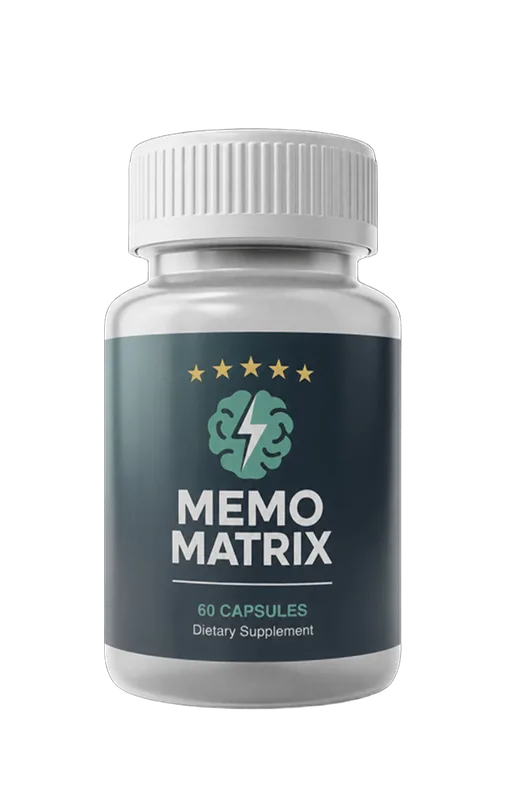
If you want a memory supplement that makes the routine above effortless, MemoMatrix is the option we recommend. It was designed around exactly the principles in this guide: one simple daily dose, no stimulants to fight with your coffee or your sleep, and a blend built to work cumulatively over weeks.
- Simple dose: 2 capsules a day, and each 60-capsule bottle is a 30-day supply. Our suggested routine is both capsules with breakfast and a glass of water.
- Stimulant-free: no caffeine, so the morning slot never costs you sleep, and the evening slot is a safe backup on hectic days.
- Built for daytime focus: L-Theanine and Rhodiola Rosea for calm, steady attention, alongside Bacopa Monnieri for recall, Alpha-GPC and Huperzine A for acetylcholine support, Phosphatidylserine for brain-cell membranes, and Lion's Mane and Ginkgo Biloba for long-term nerve health and circulation.
- Clean label: plant-based, non-GMO, non-habit-forming, made in a US GMP-certified, FDA-registered facility.
On the official store it runs from $49 per bottle on the 6-bottle bundle (with free US shipping and three bonus guides), $69 per bottle for 3 and $79 per bottle for 2, all protected by a 60-day money-back guarantee — long enough to run the two-month routine above and judge it honestly. Because the benefits build over a few weeks of daily use, the multi-bottle bundles are the practical choice for anyone serious about a fair trial.
Frequently Asked Questions
What is the best time of day to take a memory supplement?
For most stimulant-free memory supplements, the morning is the practical winner: it lines the ingredients up with the hours you actually need to think, it is the easiest time to build a habit, and it keeps the routine away from your sleep. The exact hour matters far less than taking it at the same time every day.
Should I take nootropics with or without food?
Taking a memory supplement with a meal is a sensible default. Several common nootropic nutrients, such as phosphatidylserine and botanical extracts, are generally considered easier to absorb alongside some dietary fat, and food reduces the chance of mild stomach upset from capsules. Follow the directions on your product's label.
Can I take a memory supplement at night?
If the formula is stimulant-free, like MemoMatrix, it can be taken in the evening without the sleep problems caffeine-based products cause. Many people still prefer the morning so the ingredients are on board during the workday, but the most important rule is consistency.
How should I take MemoMatrix?
The label calls for 2 capsules a day, and each 60-capsule bottle is a 30-day supply. Our suggested routine is both capsules with breakfast and a glass of water, at the same time every day. It is stimulant-free, so it will not interfere with your coffee or your sleep.
What if I forget a dose of my memory supplement?
Just take your normal dose the next day. Do not double up. The benefits of natural nootropics build over weeks of regular use, so one missed day changes very little, while a pattern of missed days does.
How long until I notice a memory supplement working?
Natural, stimulant-free nootropics build gradually. Plan on at least 2 to 4 weeks of daily use before judging, and give it 8 to 12 weeks for a fair trial, which is why a long money-back guarantee matters.