Lion's Mane for Memory and Focus: Does It Work & How Long Does It Take?
The Quick Answer
Lion's Mane is one of the most exciting natural nootropics for long-term brain support. Its unique compounds encourage nerve growth factor in lab research, and a small human trial in older adults found better cognitive scores after 16 weeks of daily use. It is not a stimulant and it works slowly — give it at least a month. It shines brightest alongside partners like Bacopa, Alpha-GPC and L-Theanine, which is exactly how MemoMatrix uses it.
Lion's Mane went from an obscure culinary mushroom to the most talked-about "brain mushroom" in just a few years. It shows up in coffees, gummies and capsules, all promising sharper memory and focus. So what is it, what does the research actually suggest, and how long should you wait before deciding whether it is working? Here is a clear, plain-English guide.
What is Lion's Mane?
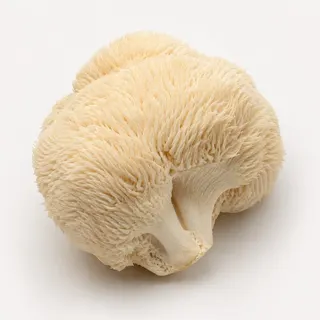
Lion's Mane (Hericium erinaceus) is an edible mushroom with long, white, shaggy spines that look a bit like a lion's mane — hence the name. It has been eaten as food and used in traditional East Asian wellness practices for centuries.
What makes it interesting for the brain are two families of natural compounds:
- Hericenones — found mainly in the mushroom's fruiting body (the part you see).
- Erinacines — found mainly in the mycelium (the root-like network).
In laboratory and animal research, both have been shown to stimulate nerve growth factor (NGF), a protein that helps brain cells grow, maintain themselves and form connections. That is why Lion's Mane is described as supporting brain health from the ground up, rather than giving a quick buzz.
What does the research suggest for memory and focus?
Here is the honest, encouraging picture:
- Older adults with mild memory decline: the best-known human study, a small placebo-controlled trial in Japan, gave older adults with mild cognitive impairment Lion's Mane daily for 16 weeks. Their scores on a cognitive test improved compared with placebo — a genuinely promising result.
- Consistency matters: in that same study, the gains faded within weeks after people stopped taking it. That tells you Lion's Mane is a daily habit, not a short course.
- Healthy younger adults: early studies are fewer and shorter, with some hints of faster performance on attention tasks. Research here is still developing.
In short: Lion's Mane is a promising, gentle, long-game ingredient. It is not a magic switch, and it does not need to be — its value is steady support that builds over time.
How long does Lion's Mane take to work?
This is the question people ask most, and the answer is: longer than coffee, and that is normal.
| Timeframe | What people typically notice |
|---|---|
| Week 1–2 | Usually nothing dramatic. Some people report a calmer, clearer head. |
| Week 3–4 | Focus may feel steadier; this is a fair point to check in with yourself. |
| Month 2–4 | The window human memory research actually measured (around 16 weeks). |
| Ongoing | Benefits appear to depend on continued daily use. |
Because the effect builds gradually, the best way to judge Lion's Mane is to take it every day for at least a month, ideally two or three, and to keep your other habits steady so you can tell what changed.
Lion's Mane alone vs. in a nootropic blend
Lion's Mane is great at one job: supporting long-term nerve health. But memory and focus involve several different systems at once. That is why many people prefer a balanced blend over a single mushroom:
- Bacopa Monnieri — the classic herb for memory recall, with a strong tradition of use and a solid research history.
- Alpha-GPC and Huperzine A — support acetylcholine, the "learning" neurotransmitter.
- Phosphatidylserine — a building block of brain cell membranes (more in Phosphatidylserine for memory).
- L-Theanine — the calm-focus amino acid found in green tea.
- Rhodiola Rosea — an adaptogen traditionally used for mental fatigue and stress.
- Ginkgo Biloba — traditionally used to support healthy circulation to the brain.
Put Lion's Mane together with those seven partners and you cover nerve health, recall, neurotransmitters, calm focus and stress resilience in one routine — instead of juggling five or six separate bottles. That all-in-one approach is exactly what MemoMatrix, our top-rated blend, is built on.
Get more from Lion's Mane with the basics
No supplement replaces sleep, movement and protected attention — and those habits make any nootropic work better. Our starter guide ranks them by bang-for-effort: How to Improve Memory and Focus Naturally. And if you are deciding between a supplement, brain-training apps or simply more coffee, see Nootropic Supplement vs. Brain Games vs. Coffee.
If you notice memory problems that are sudden, severe or getting worse, talk to a doctor first — that deserves a proper evaluation.
Our recommendation: MemoMatrix

If you want to try Lion's Mane for memory and focus, MemoMatrix is the option we recommend, and the easiest way to do it: you get the mushroom plus the seven partners that cover what Lion's Mane alone does not, in one simple daily routine.
MemoMatrix includes Lion's Mane as one of 8 plant-based nootropics — alongside Bacopa, Ginkgo, Phosphatidylserine, Rhodiola, Alpha-GPC, Huperzine A and L-Theanine. It is stimulant-free, non-GMO and made in a US GMP-certified, FDA-registered facility. The routine is simple: 2 capsules a day, with each 60-capsule bottle lasting a month.
On the official store it runs from $49 per bottle on the 6-bottle bundle (with free US shipping), $69 per bottle for 3 and $79 per bottle for 2, all covered by a 60-day money-back guarantee — long enough to give a slow-building ingredient like Lion's Mane a fair trial. The one thing to keep in mind: like every natural nootropic, its benefits build over a few weeks of daily use.
Frequently Asked Questions
Does Lion's Mane really help memory?
Lion's Mane is one of the most promising natural nootropics. Its compounds, hericenones and erinacines, have been shown in laboratory research to stimulate nerve growth factor, and a small placebo-controlled trial in older Japanese adults with mild cognitive decline found improved cognitive scores over 16 weeks of daily use. Human research is still young, so it is best seen as a supportive ingredient taken consistently.
How long does Lion's Mane take to work?
Lion's Mane is a slow, cumulative ingredient. Some people report clearer focus within a couple of weeks, but the human studies on memory ran for around 16 weeks. Plan on at least a month of daily use, ideally two to three, before judging it.
Is Lion's Mane a stimulant?
No. Lion's Mane is an edible mushroom, not a stimulant, and it contains no caffeine. It will not give you a jolt like coffee; its appeal is gradual, steady support you can take every day.
Does Lion's Mane stop working if you stop taking it?
In the best-known trial, the gains faded within a few weeks of stopping, which suggests Lion's Mane works best as an ongoing daily habit rather than a short course.
Is it better to take Lion's Mane alone or in a blend?
Lion's Mane supports long-term nerve health, while ingredients like Bacopa, Alpha-GPC, L-Theanine and Rhodiola cover memory recall, acetylcholine, calm focus and stress resilience. A balanced blend such as MemoMatrix combines all of these in two capsules a day, which is more convenient than buying and dosing each one separately.
Is Lion's Mane safe?
Lion's Mane is an edible culinary mushroom and is generally well tolerated; the most commonly reported side effects are mild stomach upset or, rarely, skin rash. Avoid it if you are allergic to mushrooms, and check with your doctor if you are pregnant, nursing or take prescription medication.
Ready to try Lion's Mane the easy way? Get MemoMatrix with the 60-day money-back guarantee →